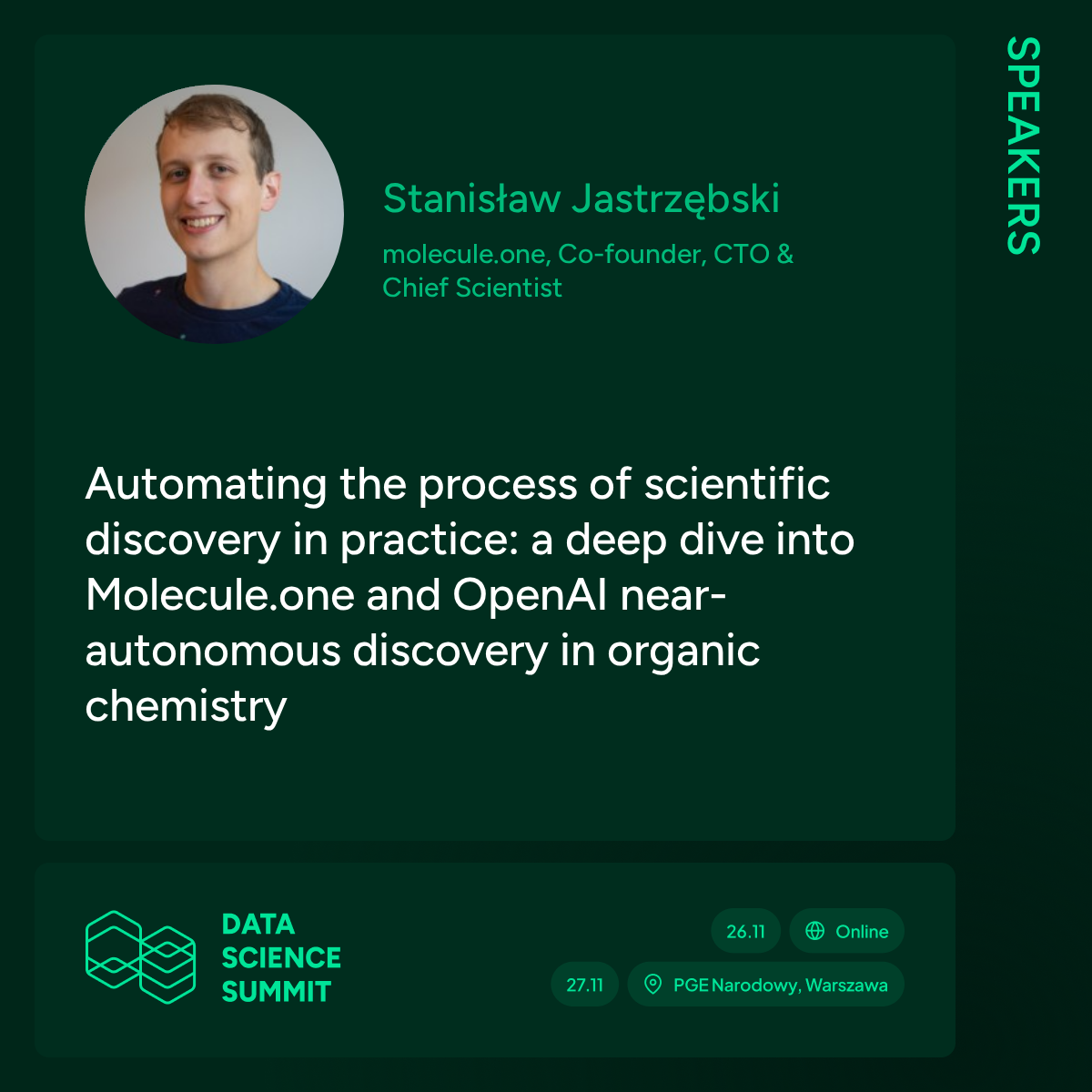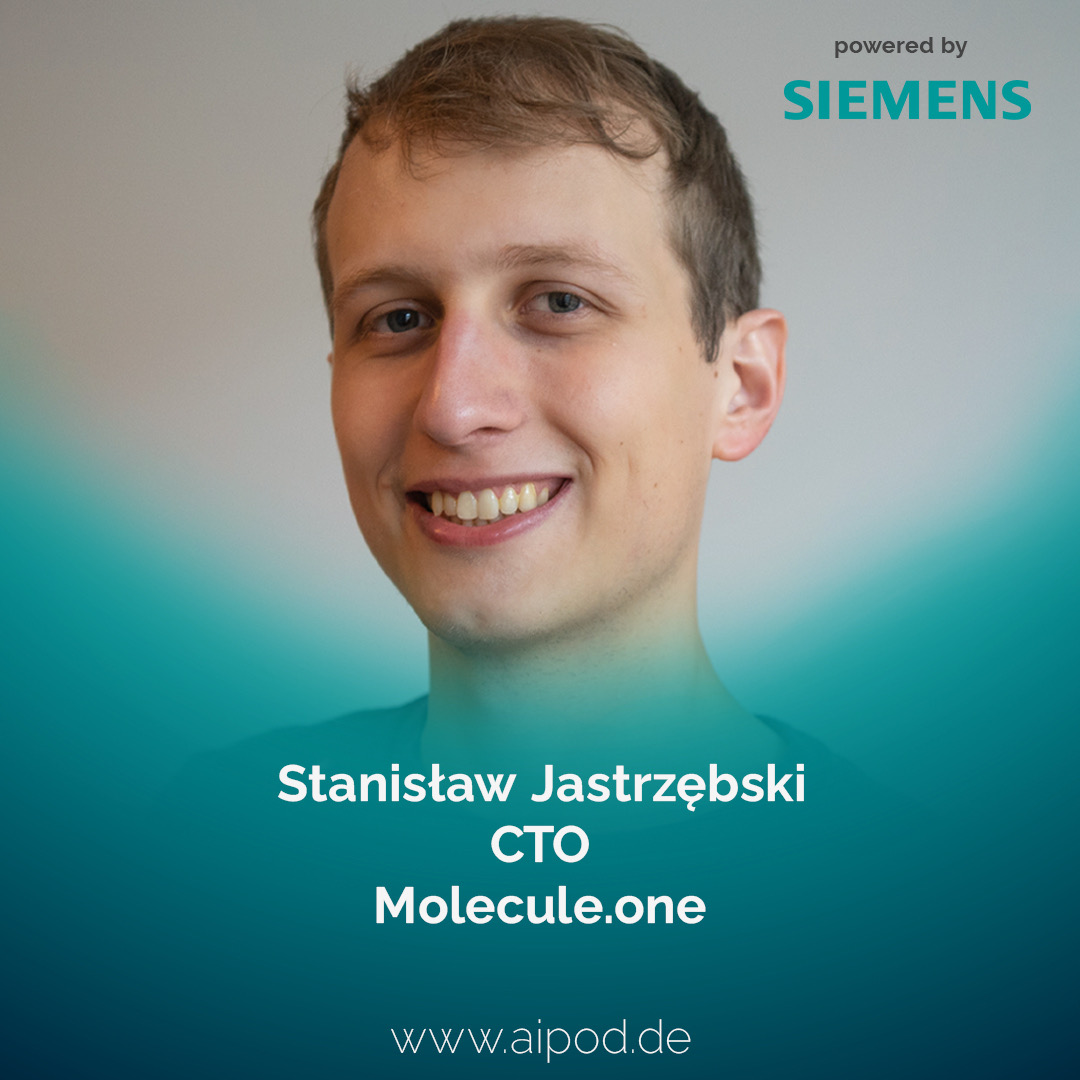
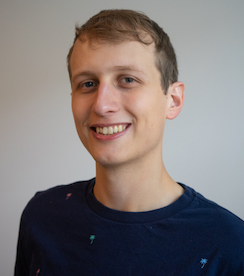
Hello! 👋 I am a scientist-founder building molecule.one as co-founder and CTO & Chief Scientist. My overall goal is to automate physical scientific discovery and build on this path safer AI. I am also working in the broader field of recursive self-improvement.
Now, my focus is on molecule.one's mission to make an AI-driven chemical discovery that reaches the level of a Nature or Science paper. We have recently shown the first near-autonomous discovery in organic chemistry with OpenAI.
At molecule.one, I co-founded Maria in 2020, a first-of-its-kind microliter high-throughput chemistry platform. We named it after Maria Skłodowska-Curie to reflect our ambition to both automate chemistry and discover new reactivity. We built the largest microliter reaction dataset and used it to train models that, for the first time, surpassed human-level accuracy. It now supports multiple projects such as our strategic partnership with W.R. Grace, one of the largest CDMOs.
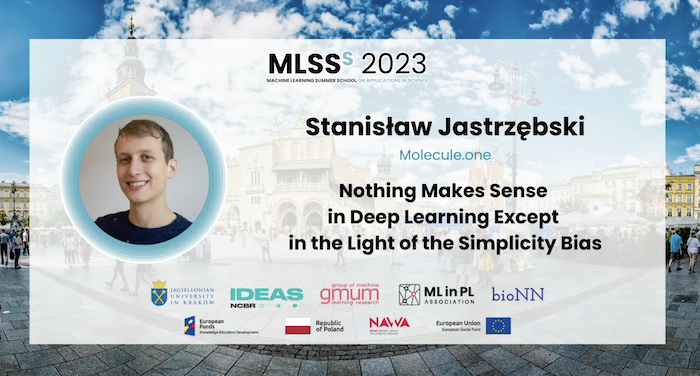
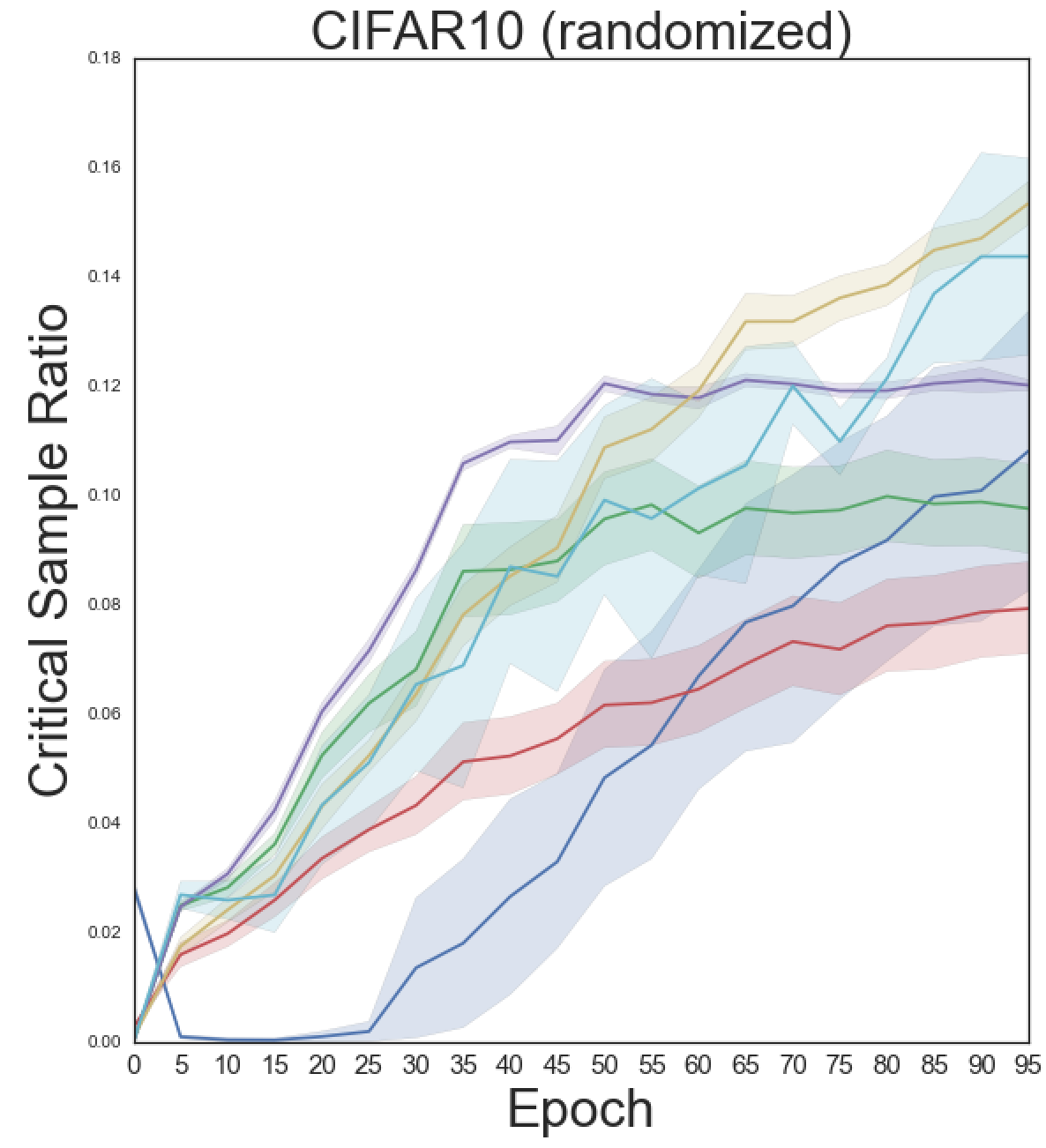
I am a deep learning scientist at heart. I have co-authored widely cited research on the foundations of neural networks, working in the field since its early days. I discovered the existense of progressive sharpening and the break-even point where curvature growth is the direct cause of the instability prevalent in any deep learning training. These concepts were later formalized and extended as the well-known edge of stability phenomenon. I serve the research community as an Action Editor at TMLR and Area Chair for leading conferences, most recently NeurIPS 2026.
I am passionate about learning across natural and artificial systems, from deep neural networks to the scientific process. Today, I apply this perspective to autonomous discovery in chemistry at molecule.one, and more broadly to the field of recursive self improvement.
The main question I pose is: how do we develop AI that can contemplate breakthrough ideas that challenge established knowledge? The current paradigm is too heavily biased by the priors derived from public data.
I completed a postdoc at New York University with Kyunghyun Cho and Krzysztof Geras, and before that a PhD at Jagiellonian University focused on the foundations of deep neural networks. Along the way, I collaborated with researchers at Mila (Yoshua Bengio), the University of Edinburgh, and Google Research.
During my PhD, I studied the foundations of gradient-based training and co-authored highly cited work showing how optimization dynamics can drive neural networks into high-curvature regimes. The work helped explain the mysterious role of learning rate in generalization and training stability. These findings were published at ICLR 2020 spotlight paper and discussed in Understanding Deep Learning (MIT Press).

For a full list, please see my Google Scholar profile.
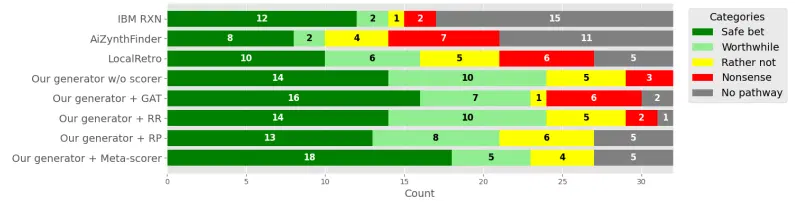
M. Sadowski, [...], S. Jastrzebski
NeurIPS 2026
paper
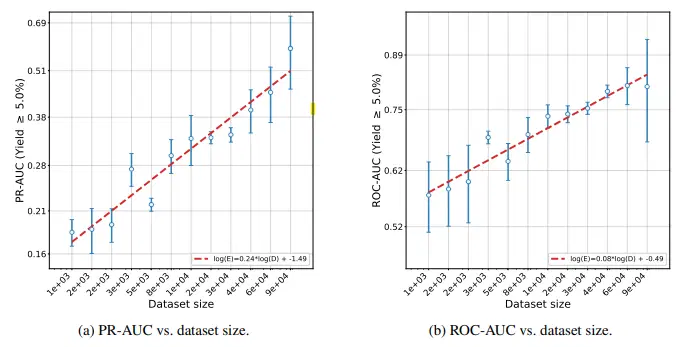
M. Sadowski, L. Sztukiewicz, M. Wyrzykowska, [...], S. Jastrzebski
NeurIPS 2025 Workshop AI4Science
paper
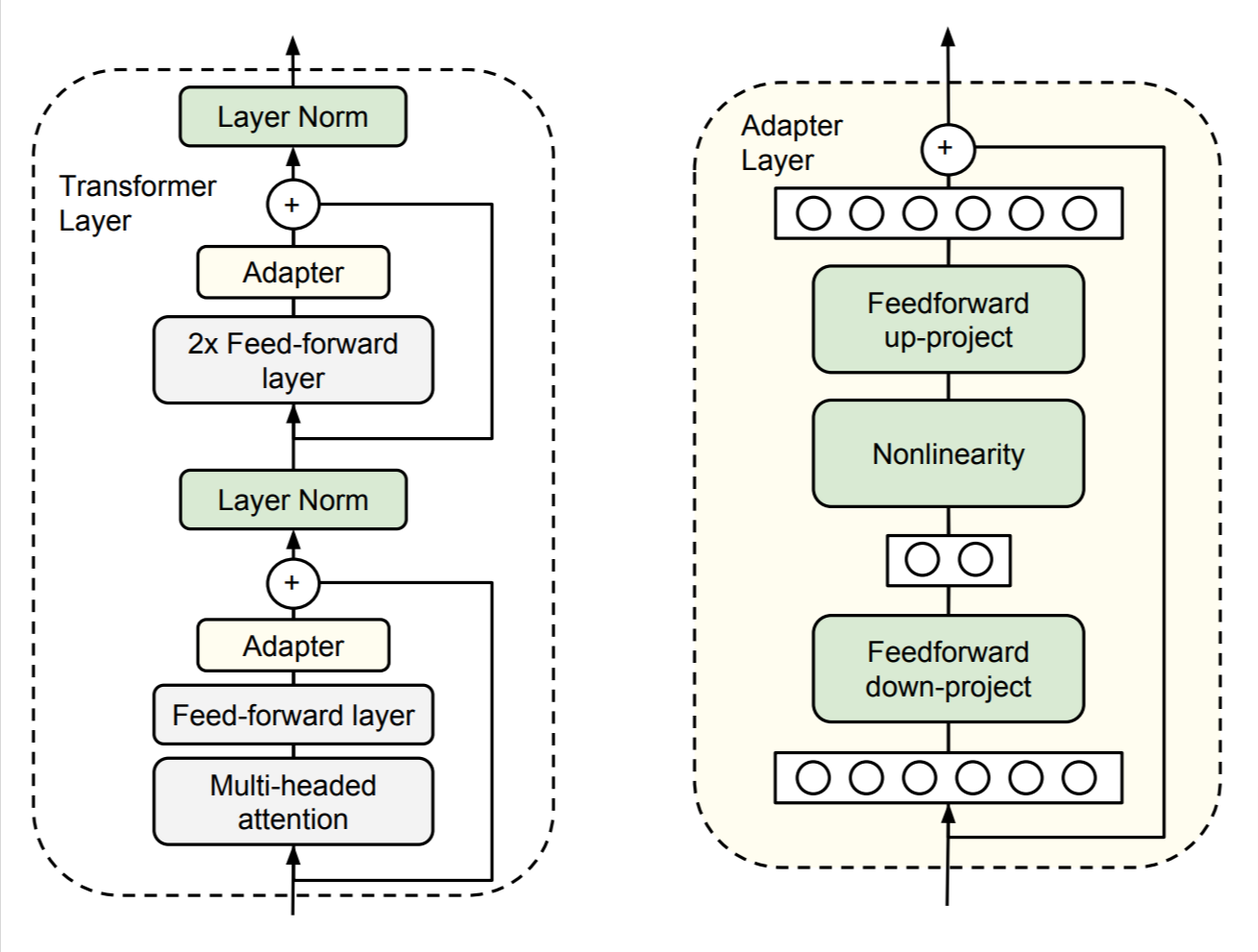
S. Houlsby, A. Giurgiu, S. Jastrzebski, B. Morrone, Q. de Laroussilhe, A. Gesmundo, M. Attariyan, S. Gelly
International Conference on Machine Learning 2019
paper
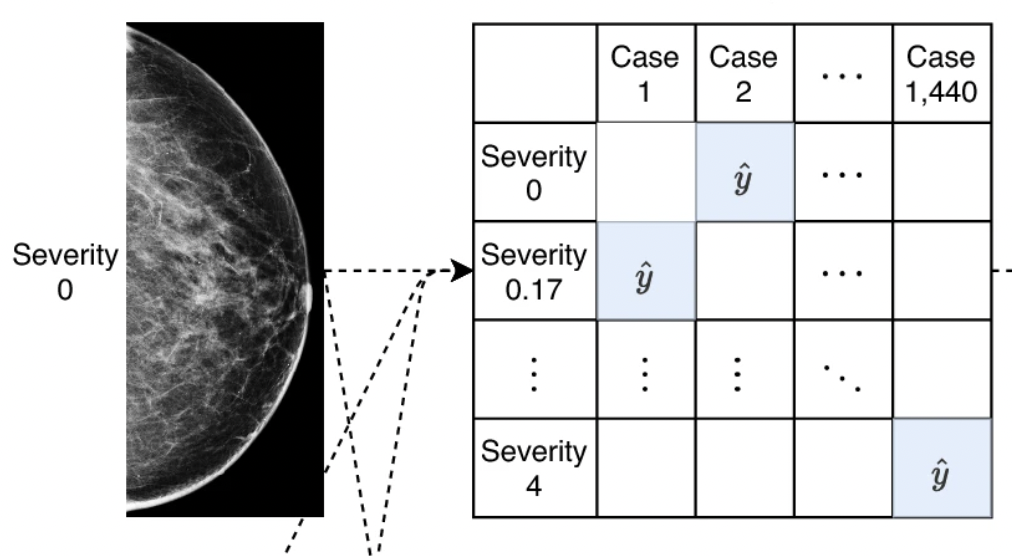
T. Makino, S. Jastrzebski, Witold Oleszkiewicz, [...], Kyunghyun Cho, Krzysztof J Geras
Nature Scientific Reports 2022
paper
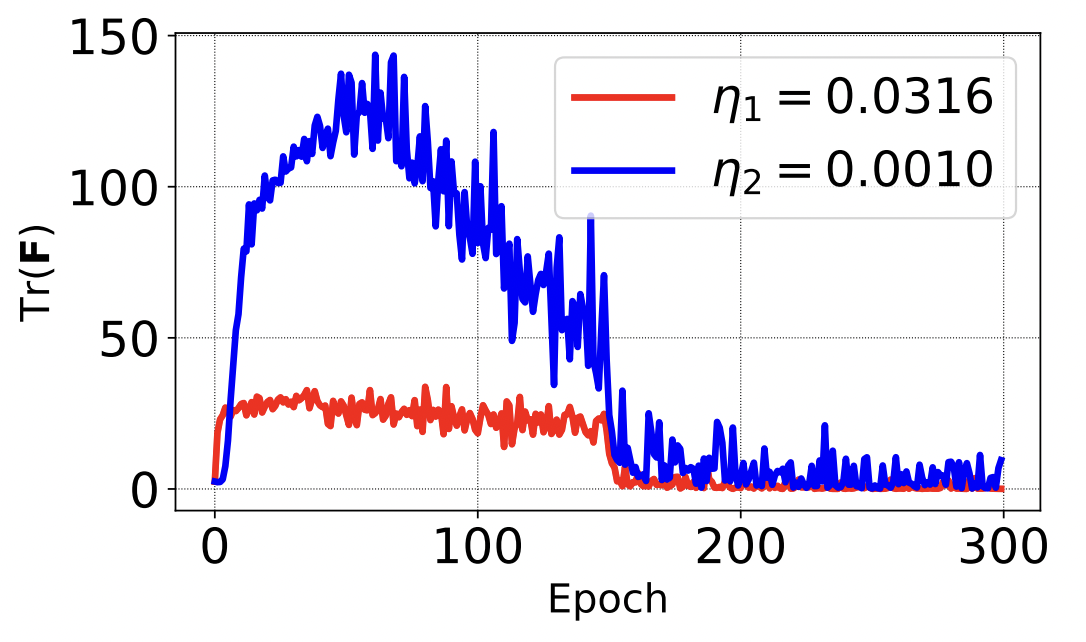
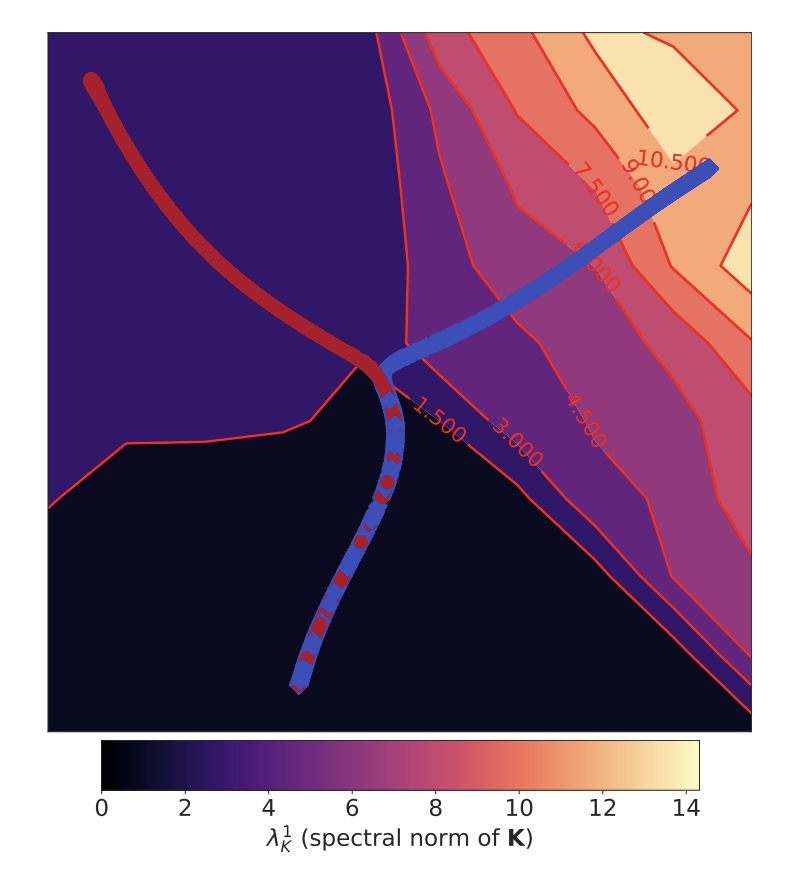
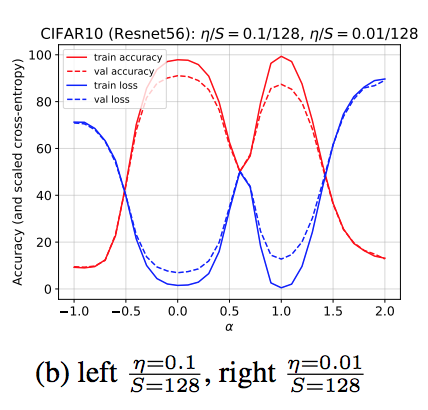
S. Jastrzębski*, Z. Kenton*, D. Arpit, N. Ballas, A. Fischer, Y. Bengio, A. Storkey
International Conference on Artificial Neural Networks 2018 (oral), International Conference on Learning Representations 2018 (workshop)
paper